Birmingham sits nestled among the Appalachian foothills, and that rolling, hilly terrain is a big part of what gives the city its distinctive character. Neighborhoods like Vestavia Hills, Mountain Brook, and the winding roads through Red Mountain all offer scenic drives, but they also put a very specific kind of strain on your vehicle’s brakes that drivers in flatter cities simply never experience to the same degree. Combine that terrain with the everyday stop and go traffic on routes like I 65 and Highway 280, and Birmingham brake pads and rotors end up working considerably harder than most drivers realize.
Why Hills Wear Down Brakes Faster Than Flat Terrain
On level ground, your brakes primarily handle stopping and slowing for traffic, stop signs, and intersections. On a hill, particularly during a sustained downhill stretch, your brakes take on an additional job of continuously managing your vehicle’s speed against the pull of gravity. This means brakes on a hilly descent are engaged for much longer, more continuous periods rather than the shorter, intermittent bursts typical of flat road driving.
This extended engagement generates significantly more heat than routine braking, since the brakes are essentially working the entire way down rather than during brief individual stops. Repeated exposure to this kind of sustained heat accelerates wear on brake pads and can also affect rotors over time, sometimes leading to warping if the heat buildup becomes severe enough on a regular basis, such as during a daily commute that includes a steep, sustained descent.
How Birmingham’s Terrain Compounds With City Traffic
Birmingham drivers rarely get the luxury of a hill without traffic mixed in. A descent down a steep grade during rush hour often means braking not just to manage speed on the hill itself, but also to respond to the stop and go conditions layered on top of it. This combination, sustained downhill braking plus frequent stops for traffic, creates a particularly demanding environment for brake components, arguably harder on pads and rotors than either factor would be on its own.
Areas around Red Mountain Expressway and the hillier sections connecting downtown to surrounding suburbs see this combination regularly, with commuters navigating both grade changes and heavy traffic volume during the same stretch of their daily drive. Over time, this compounded wear pattern means Birmingham commuters in these areas often need brake service more frequently than the standard maintenance interval would suggest for their overall mileage.
Warning Signs Birmingham Drivers Should Watch For
A high pitched squealing sound, often from a built in wear indicator designed to alert you before pads become dangerously thin, is one of the more common early warning signs. Grinding noises indicate a more advanced stage of wear, where pad material has worn down enough that metal is beginning to contact metal, which is a much more serious and expensive situation to let continue.
A brake pedal that feels softer than usual, requires more pressure to engage, or seems to sink slightly before actually stopping the vehicle can indicate declining brake fluid condition or air in the brake lines, both of which become more noticeable under the sustained heavy use that hilly terrain demands. A burning smell after a long descent, or visible smoke coming from a wheel area, suggests your brakes have overheated significantly and should be checked as soon as possible before continuing to drive, particularly before attempting another steep descent.
If you have dealt with a car that would not start after sitting following a long drive through Birmingham’s hills, our guide on the top 10 reasons your car won’t start and how to get back on the road covers a range of causes worth ruling out alongside any brake related concerns.
How Often Birmingham Drivers Should Check Their Brakes
Standard brake inspection intervals are generally built around average driving conditions, which do not fully account for the extra strain that sustained hill descents add to the equation. Drivers who regularly navigate Birmingham’s hillier neighborhoods or commute through areas with significant elevation change should consider having brakes checked more frequently than the standard annual interval, particularly if their daily route includes any sustained downhill stretches combined with regular traffic.
A simple visual inspection can often catch a pad that is getting thin well before it starts making noise, which typically means a more affordable pad replacement rather than waiting for a full brake job that also requires rotor resurfacing or replacement due to accumulated heat damage.
Driving Habits That Help Reduce Brake Strain On Hills
Downshifting to a lower gear during a long, steep descent, when your vehicle allows for it, uses engine braking to help control speed rather than relying entirely on your brake pads and rotors. This technique reduces the continuous heat buildup that comes from sustained brake use alone and can meaningfully extend the life of your brake components if used consistently on Birmingham’s steeper routes.
Vehicles equipped with a manual transmission or a manual shift mode on an automatic can take fuller advantage of this technique, but even drivers in a standard automatic can benefit from selecting a lower gear range on the steepest descents rather than leaving the transmission to shift entirely on its own. This is a habit worth building specifically for routes through Mountain Brook or Vestavia Hills, where the grade change is significant enough that engine braking makes a noticeable difference in how hard the brake pads actually have to work.
Maintaining a bit more following distance on hilly stretches also allows for more gradual braking rather than sudden, hard stops, which generate more heat and wear than smoother, earlier braking accomplished with lighter, sustained pressure.
Why A Mobile Mechanic Fits Birmingham’s Terrain Well
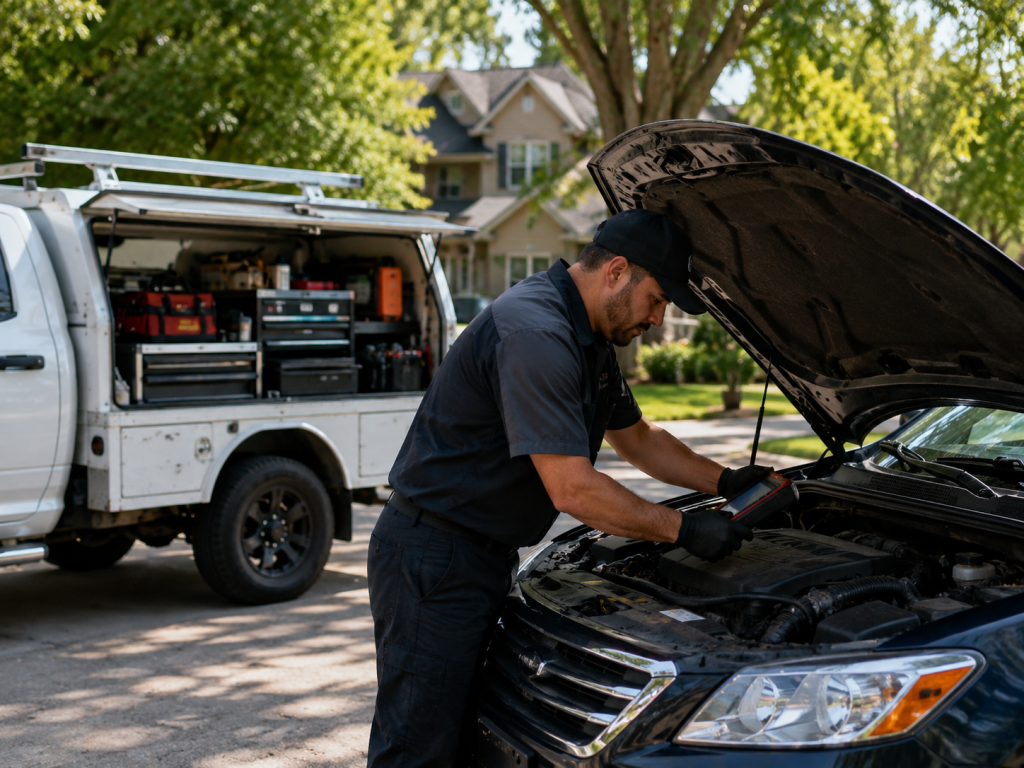
Given how much extra strain Birmingham’s hills put on brake systems, having a technician familiar with these specific driving conditions come directly to your home or workplace offers a real advantage. A mobile mechanic can inspect pads, rotors, and brake fluid condition right where your vehicle is parked, catching wear that hilly commuting accelerates before it turns into a more serious and expensive repair.
We covered the broader benefits of this approach in our article on why mobile mechanics are better than traditional auto shops in Birmingham, which explains how convenience and local familiarity come together, particularly useful for the kind of frequent brake maintenance that hilly terrain like ours tends to require.
Stay Ahead Of What Birmingham’s Hills Are Doing To Your Brakes
Birmingham’s rolling terrain is part of what makes the city distinctive, but it also means brake wear happens faster here than it would in a flatter city with otherwise similar traffic patterns. Paying attention to early warning signs, adjusting driving habits on steep descents, and having brakes checked more often than the standard schedule suggests are all simple ways to stay ahead of the extra demands this terrain places on your vehicle.
If it has been a while since your brakes were inspected, visit our homepage to learn more about our services, or reach out through our contact us page to schedule a visit at your home or office anywhere in the Birmingham area.
A little extra attention now can help your brakes keep up with everything Birmingham’s hills and traffic ask of them every single day.