
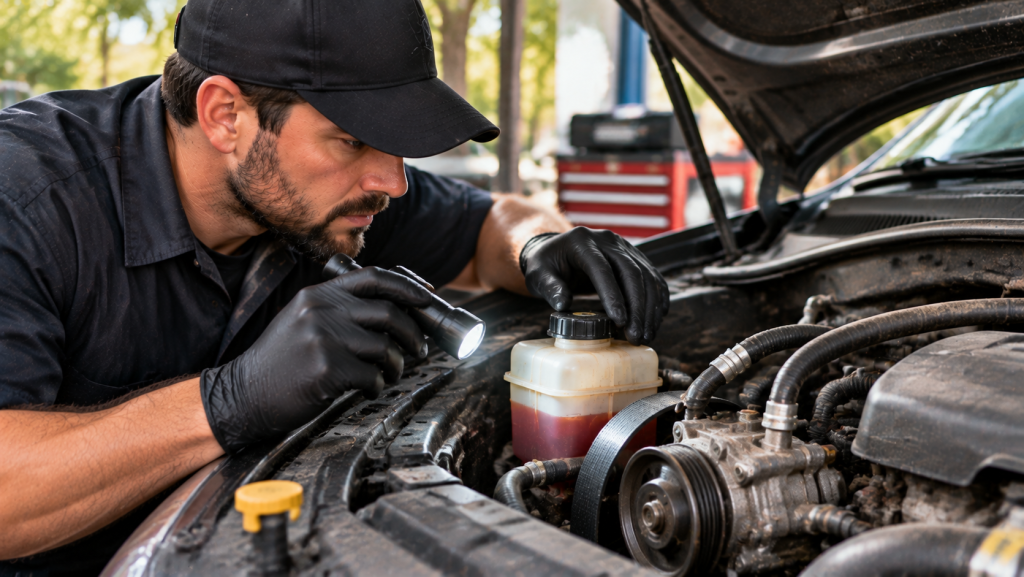
Most drivers never think about power steering until it stops working the way it should. One day the steering wheel turns with a light touch, and the next it feels heavy, noisy or strange. Power steering does a lot of quiet work, making it easy to turn a heavy car at parking speeds and keeping the steering smooth on the road. When something goes wrong, it can affect how safely you can control the vehicle. This guide explains how power steering works, the warning signs to watch for, the common causes and what to do next. If your car feels hard to steer in Birmingham, or you are searching for power steering repair, here is what to know.
How Power Steering Works
Turning a car’s front wheels takes real force, especially at low speeds or when parked. Power steering adds assistance so you do not have to provide all that effort yourself. There are a few main types, and your owner’s manual can tell you which one your vehicle uses.
- Hydraulic power steering uses a pump driven by the engine, along with fluid, hoses and a steering gear, to provide assistance. The pump pushes pressurized fluid to help move the steering components.
- Electric power steering uses an electric motor to help turn the wheels. There is no pump or fluid, and the system relies on sensors, a control module and the car’s electrical system.
- Electro hydraulic systems combine the two, using an electric motor to run a hydraulic pump.
Because the types are different, the problems and the repairs differ too. Knowing what your car has is the first step in understanding what might be wrong.
Signs Your Power Steering Is Failing
The steering feels heavy or hard to turn
This is the most common and most noticeable sign. The wheel takes more effort than usual, particularly at low speeds or when turning into a parking spot. If it suddenly becomes much harder to steer, that is a safety concern and needs prompt attention.
Whining, groaning or squealing noises
On hydraulic systems, a whine or groan when you turn the wheel often points to low fluid, air in the system or a pump that is wearing out. A squeal when you start the car or turn the wheel can come from a loose or worn belt.
Fluid leaks
Spots under the front of the car can mean a leak from a hose, the pump or the steering gear. Power steering fluid is often reddish, amber or clear, but colors vary, so check your owner’s manual and have any leak identified. Other fluids can leak too, so do not guess.
Jerky or uneven steering
If the steering feels like it catches, jumps or varies in effort as you turn, there may be a pump, pressure or sensor problem.
Vibration in the steering wheel
Vibration can come from the power steering system, but it can also come from tires, wheels, brakes or suspension. It takes an inspection to sort out which.
Looseness or play in the steering
If the wheel feels vague, loose or like it has too much play, worn steering or suspension parts could be the cause. This is a safety issue, so have it checked.
A warning light
Many cars with electric power steering have a steering warning light. If it comes on, the system may have reduced or lost assistance. Check your owner’s manual for what the light means and have the car inspected.
Foamy or dark fluid
On hydraulic systems, fluid that looks foamy, milky or dark can point to air in the system, contamination or fluid that is worn out.
Common Causes of Power Steering Problems
- Low fluid or leaks in hydraulic systems. Hoses, seals, the pump and the steering gear can all develop leaks over time.
- A worn power steering pump. The pump works constantly and can wear out, creating noise and reduced assistance.
- A worn, loose or damaged drive belt. If the belt that drives the pump slips or breaks, assistance can drop or disappear.
- Old or contaminated fluid. Fluid breaks down and collects debris over time, which can damage parts and reduce performance.
- Worn steering rack or gearbox. Internal wear can cause leaks, play and heavy steering.
- Electric system faults. In electric systems, a failing motor, sensor, control module or wiring problem can cause loss of assistance. Low battery voltage or charging problems can also trigger issues.
- Tire and alignment issues. Low tire pressure or alignment problems can make steering feel heavy or off. Check tire pressure first, using the number on the sticker in the driver’s door jamb or in your owner’s manual.
- Worn suspension and steering parts. Tie rods, ball joints and other components can wear and affect steering feel.
Why Local Roads Put Extra Demand on Steering
Steering works hard on hilly roads with lots of turns, tight parking and frequent stops. Steep grades and curves ask more from the whole front end, from the steering system to the tires and brakes. If you drive on hills regularly, your brakes and steering both deserve attention, and our post on steep hills and stop and go brake wear in Birmingham explains why they are linked to how safely your car handles.
What to Do If Your Power Steering Acts Up
- Stay calm and keep a firm grip on the wheel. If power assistance is lost, the car can usually still be steered, but it takes much more effort, and that can be dangerous at speed or in a tight turn.
- Slow down and pull over safely if steering suddenly becomes hard or the car does not respond as expected.
- Do not hold the wheel at full lock. On hydraulic systems, holding the wheel all the way to one side for long can strain the pump.
- Check for obvious signs. Look for fluid under the car, a loose or damaged belt and low tire pressure.
- Check the fluid if your car has a reservoir. Follow your owner’s manual for how and when to check it. If the level is low, use only the fluid type your manual specifies, since the wrong fluid can damage the system. Not all cars have a fluid reservoir, so this does not apply to every vehicle.
- Do not keep driving with severe problems. If steering is very heavy, a leak is heavy or a warning light is on, have the car inspected or towed.
Topping off fluid can help in a pinch, but it does not fix a leak. If the level keeps dropping, something is wrong and needs repair.
How Power Steering Problems Are Diagnosed
A technician will usually begin by listening to the symptoms and checking the basics. For a hydraulic system, that means looking at fluid level and condition, hoses, the pump, the belt and the steering gear for leaks and wear. For an electric system, it often means scanning for fault codes, checking the battery and charging system and inspecting wiring and connections. They may also check tires, alignment and the rest of the suspension and steering to see what else could be affecting how the car feels.
Typical Repairs
- Topping off or flushing and replacing the power steering fluid, using the type specified for your vehicle.
- Replacing leaking hoses or seals.
- Replacing or tightening a worn or loose belt.
- Replacing the power steering pump.
- Repairing or replacing the steering rack or gear.
- Repairing wiring, sensors or control modules on electric systems.
- Addressing battery or charging issues.
- Replacing worn steering and suspension parts, followed by an alignment where needed.
How to Help Your Steering Last
- Watch for changes. Notice new noises, heavier steering or leaks early.
- Follow your owner’s manual for fluid checks and service on hydraulic systems.
- Do not hold the wheel against the stops at full lock for long.
- Keep tires properly inflated and aligned.
- Have belts inspected during regular service.
- Fix leaks promptly. A small leak today can become a failed pump tomorrow.
- Keep the battery and charging system healthy, especially on cars with electric steering.
- Do not ignore warning lights.
What About Related Engine Problems?
Steering trouble is not always a steering problem alone. On cars with a belt driven pump, a rough running engine or a slipping belt can affect other systems at the same time. If your car is also running poorly, it may be due for a broader look at items like ignition parts. Our post on signs your spark plugs need replacing covers what to watch for there.
How a Mobile Mechanic Can Help
A mobile mechanic can come to your home or workplace, check fluid levels, look for leaks, inspect the belt, test the battery and charging system and help work out what is behind your steering trouble. Some repairs, such as replacing a belt, a hose or in some cases a pump, may be handled on site. Other jobs, like replacing a steering rack or doing an alignment afterward, usually need a lift and specialized equipment and may require a shop. A good technician will tell you honestly what can be done where you are. Because steering is a safety system, if the car feels unsafe to drive, it is best to have it towed or inspected where it is rather than risk driving it.
Quick Power Steering Checklist
- Notice heavy steering, noises, jerkiness or warning lights.
- Look under the car for leaks.
- Check tire pressure.
- Follow your owner’s manual for fluid checks.
- Do not drive if steering is severely affected.
- Get a professional diagnosis before replacing parts.
- Repair leaks and worn parts early.
Steering is not something to put off. If your car is hard to turn or acting strangely, visit the Mobile Mechanic Pros of Birmingham homepage to learn more, or contact us to schedule a visit.